DOMAIN
Real Estate
Fintech
Marketplace
ROLE
UX/UI Designer
UX Researcher
TEAM
1 Product Manager
3 UX/UI Designers
2 Developers
TIMELINE
Sep - Dec 2024

BUYER FOLIO
An integrated platform powering a real estate co-ownership startup, redefining the seller marketplace experience through clarity and trust.

OVERVIEW
Building a structured marketplace platform for shared homeownership, where property is jointly owned by multiple parties.
Background
Buyer Folio is a real estate technology startup focused on shared homeownership, AI-powered credit assessment (Folio Score®), and innovative mortgage solutions. The platform connects buyers and sellers to make co-ownership more accessible and financially viable.
Challenge
Within an existing buyer ecosystem, the challenge was to structure the seller experience so multi-party co-ownership decisions become transparent and actionable.
Solution
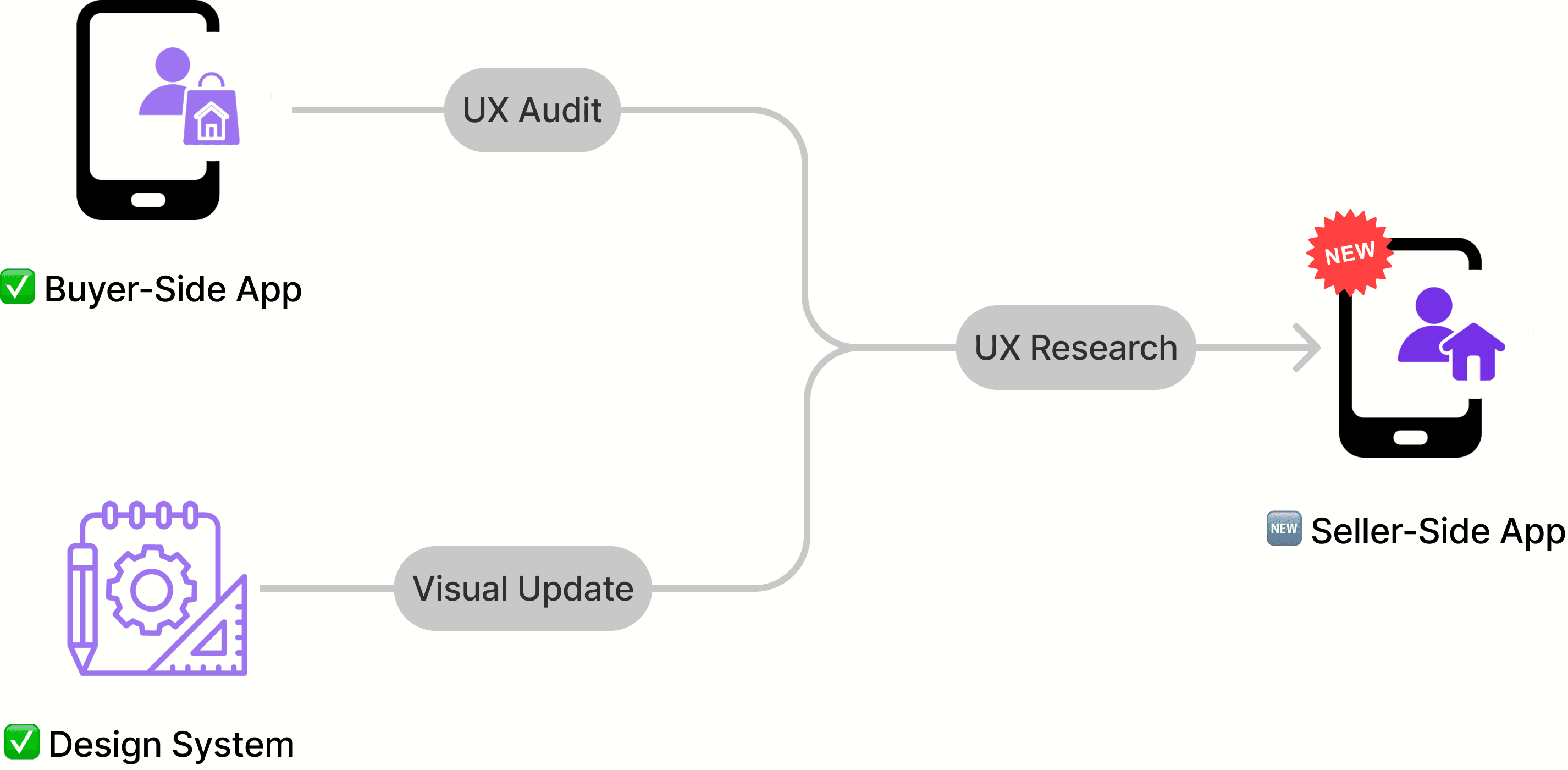
A buyer-side UX audit informed the design of a seller-side mobile app, structuring the entire seller journey through end-to-end user flows, layered information architecture, and an integrated interface that supports informed multi-party decisions.
Achievement
Usability testing, n=30. Metrics are based on task completion and post-task ratings.
Demo Request Conversion
+38%
SUS Score
82/100
Platform Trust
4.5/5
“USER”

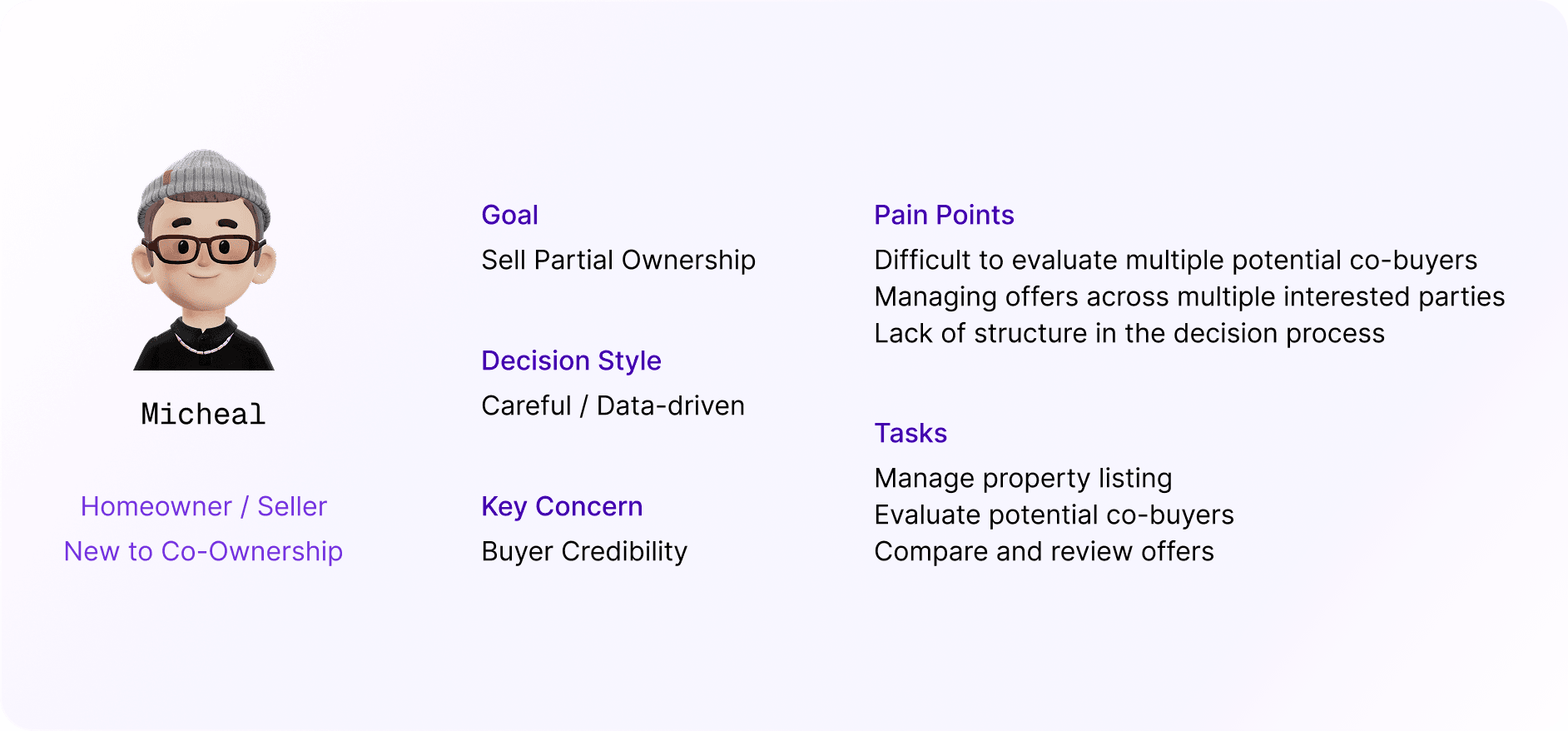
Homeowners’ JBTD
When selling a share of my property through co-ownership,
I want to manage the selling process with clear visibility into buyers and offers,
so I can choose the right partners and complete the transaction with confidence.
=> Keywords: listing management, buyer evaluation, offer handling
Persona
Edge Cases for Buyer Folio: ★Multi-Role Users
Some users sell a share of their own property while also investing in another. Although they represent a smaller segment, this dual role must be considered in the design of the Buyer Folio platform as a whole.
Secondary Research
What Interaction Patterns Are Users Familiar with in Real Estate Marketplaces?
Research Targets: Zillow, Airbnb

Pattern 1: Listing-Centered Structure
They organize the experience around property listings as the core unit. Users browse, evaluate, and interact with properties through structured listing pages.
Pattern 2: Card-Based Discovery
They commonly present options through card-based layouts, enabling quick scanning and comparison.
Pattern 3: Modular Information Hierarchy
Most marketplaces present large amounts of listing information. Successful platforms structure it through clear hierarchy, grouping, and progressive disclosure to help users quickly scan and understand complex listings.
IDEATION
Turning a flood of features into a clear path to the right partner(s).
Context
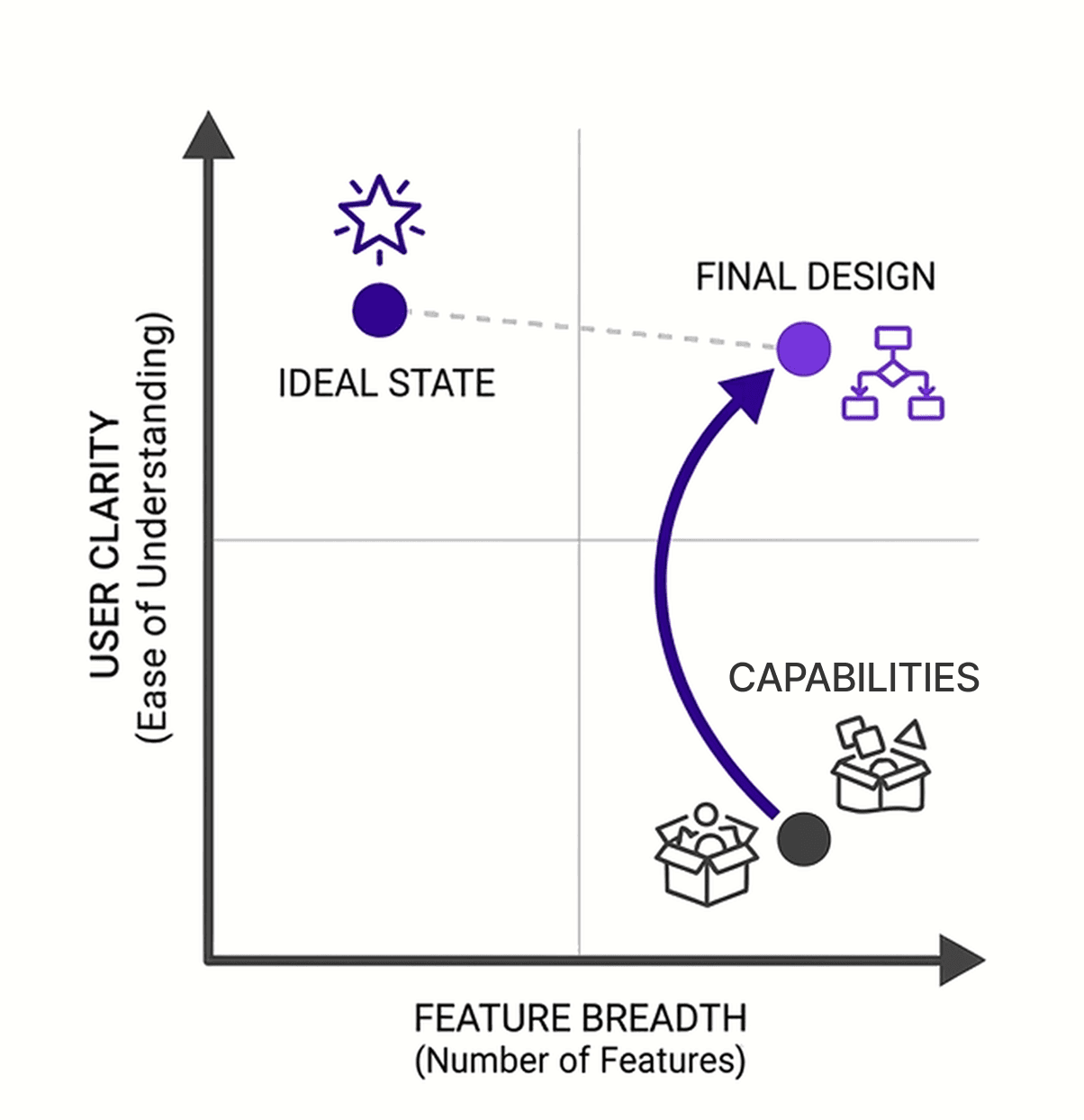
UX audit revealed feature overload in the existing buyer ecosystem.
Constraint
Stakeholders required the seller-side experience to maintain many existing platform capabilities.
Trade-Off
We avoided removing existing features due to stakeholder requirements and instead structured them into clearer workflows.
Design Scope
· A clear seller-side workflow aligned with buyer-side capabilities
· Guided onboarding through a step-by-step process
· Role-switching for multi-role users
DESIGN
*Limited preview due to NDA
01 Build Confidence: Making co-ownership easy to grasp
Focus
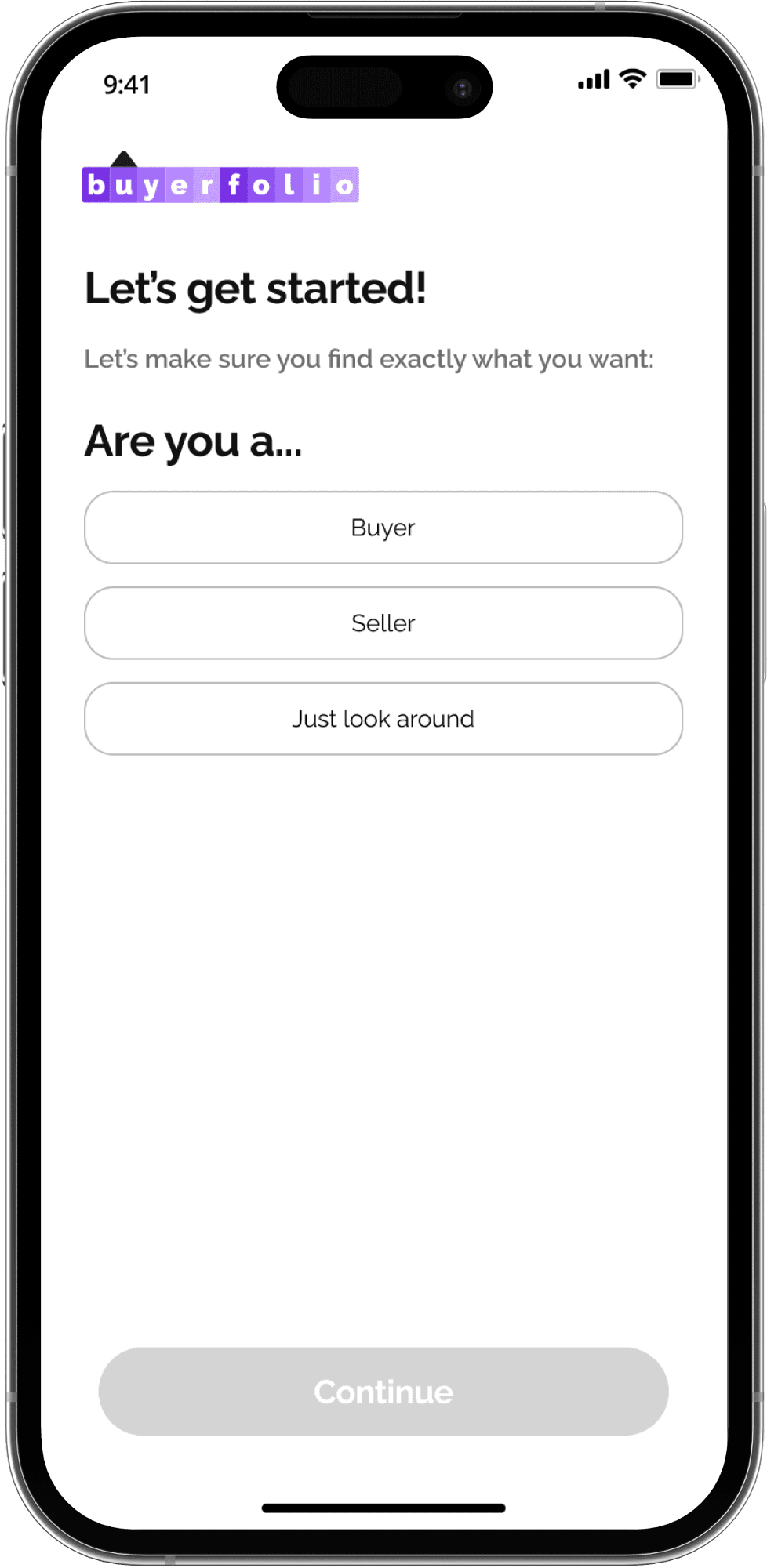
Seamless onboarding for new users, Guided accessibility
Since co-ownership is a novel concept for most, it often leads to friction when navigating the marketplace.
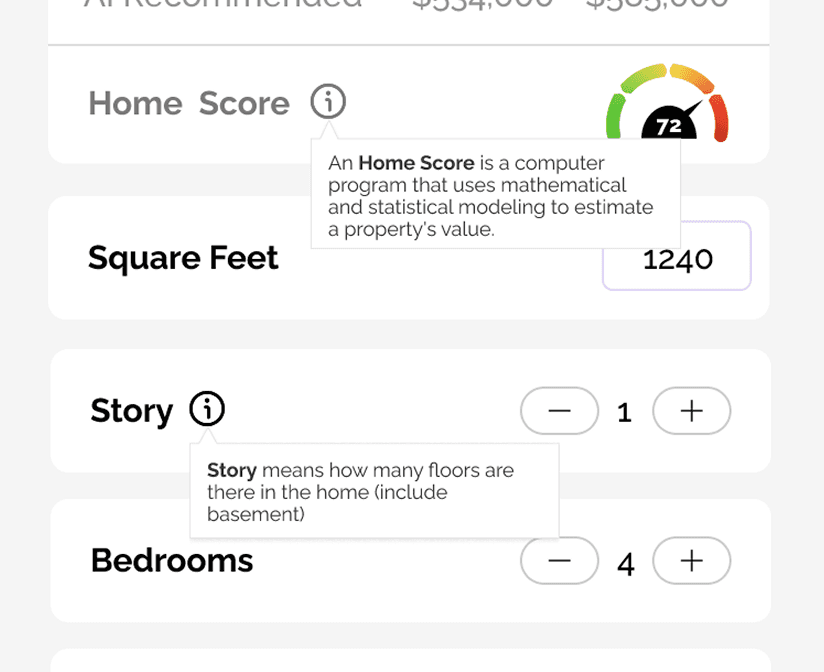
We designed this onboarding flow to build a sense of security and ensure users feel fully confident in the product logic before they initiate any transactions. Meanwhile, we incorporate contextual hints to lower cognitive barriers for a seamless start.

02 Address Hybrid Personas: Role-switching for distinct needs
Focus
Buyer / Seller Role Management
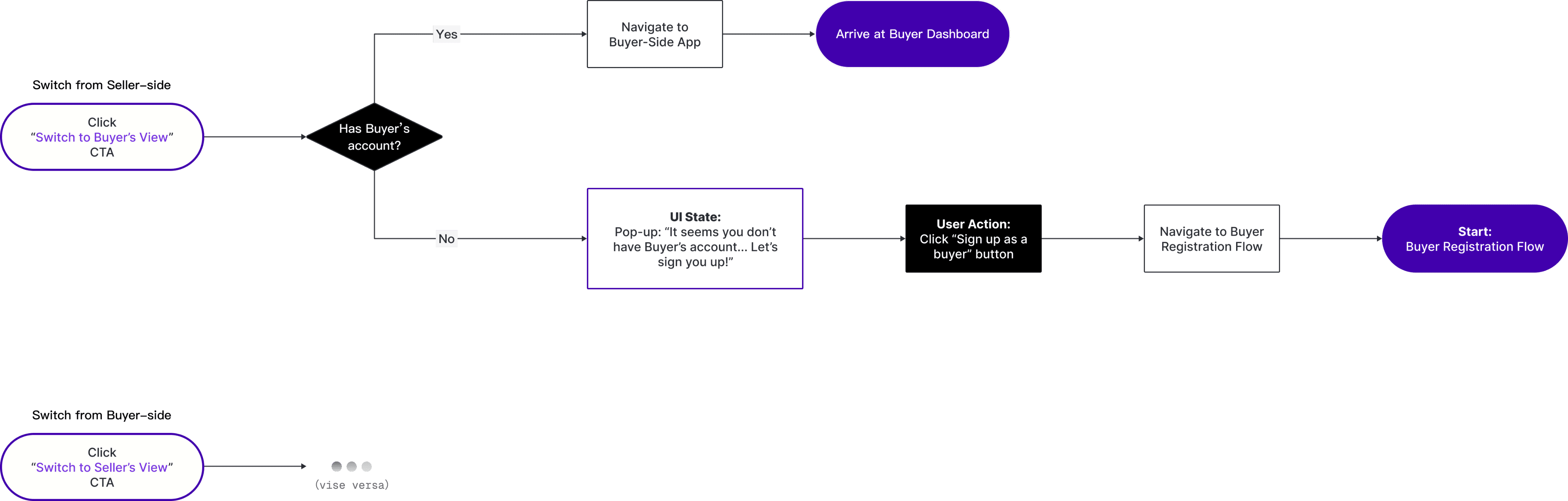
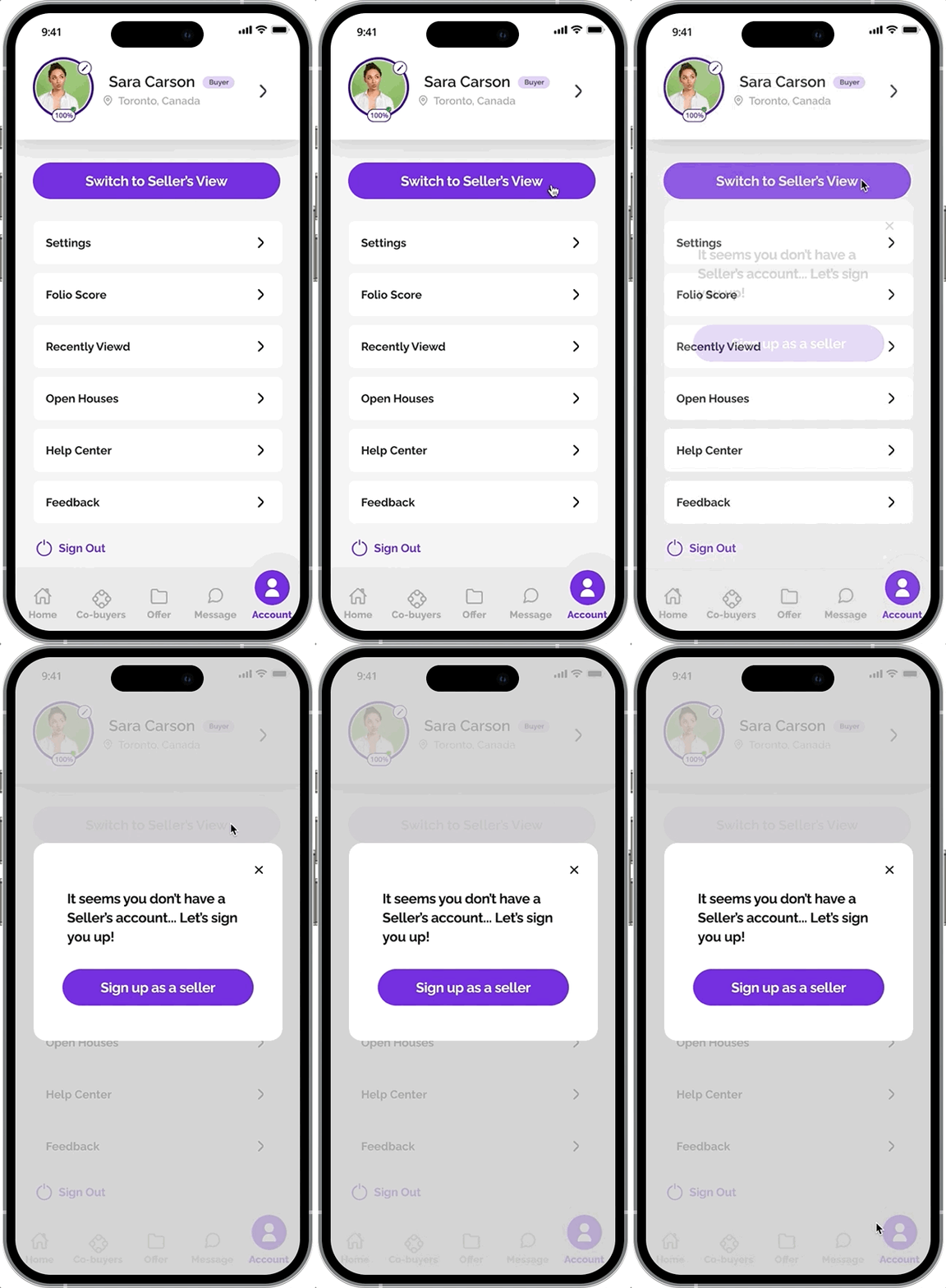
For users balancing the roles of seller and investor, we don’t need to create the trouble of maintaining multiple accounts.
We included a role selection during the signup process and a switch feature within the account center to allow users to pivot between the buyer-side and seller-side.
03 Create Clarity: Home as a Command Center
Focus
Integrated dashboard, Task prioritization
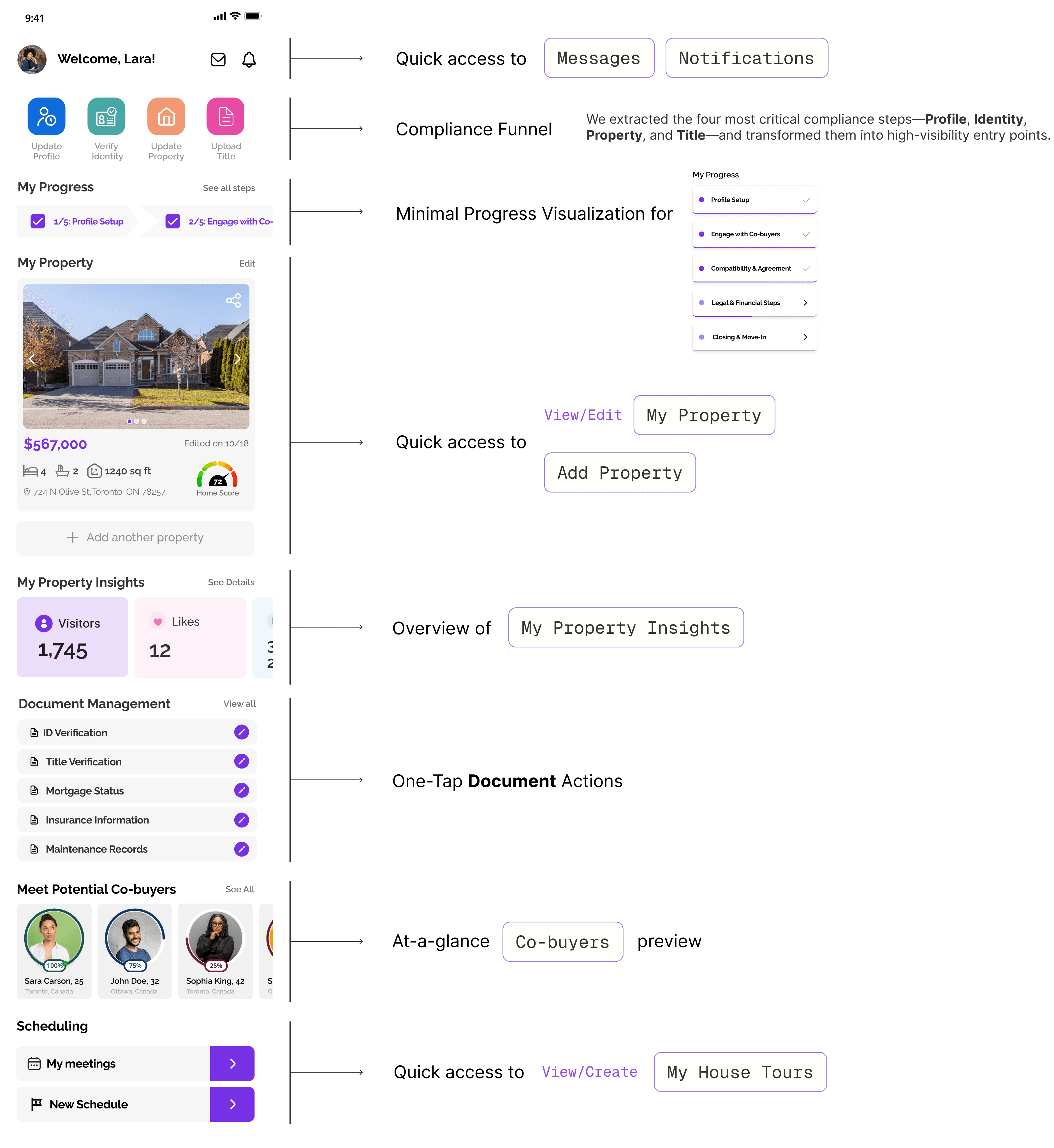
To soothe the anxiety of "feature flood," we transformed the Home screen into a centralized dashboard.
Instead of digging through menus, the most critical tasks find the user. This structural clarity replaces the chaos of real estate transactions with a sense of focus and calm.

04 Drive Success: Core modules guiding discovery to closing
Focus
Matching, Communication, Negotiation
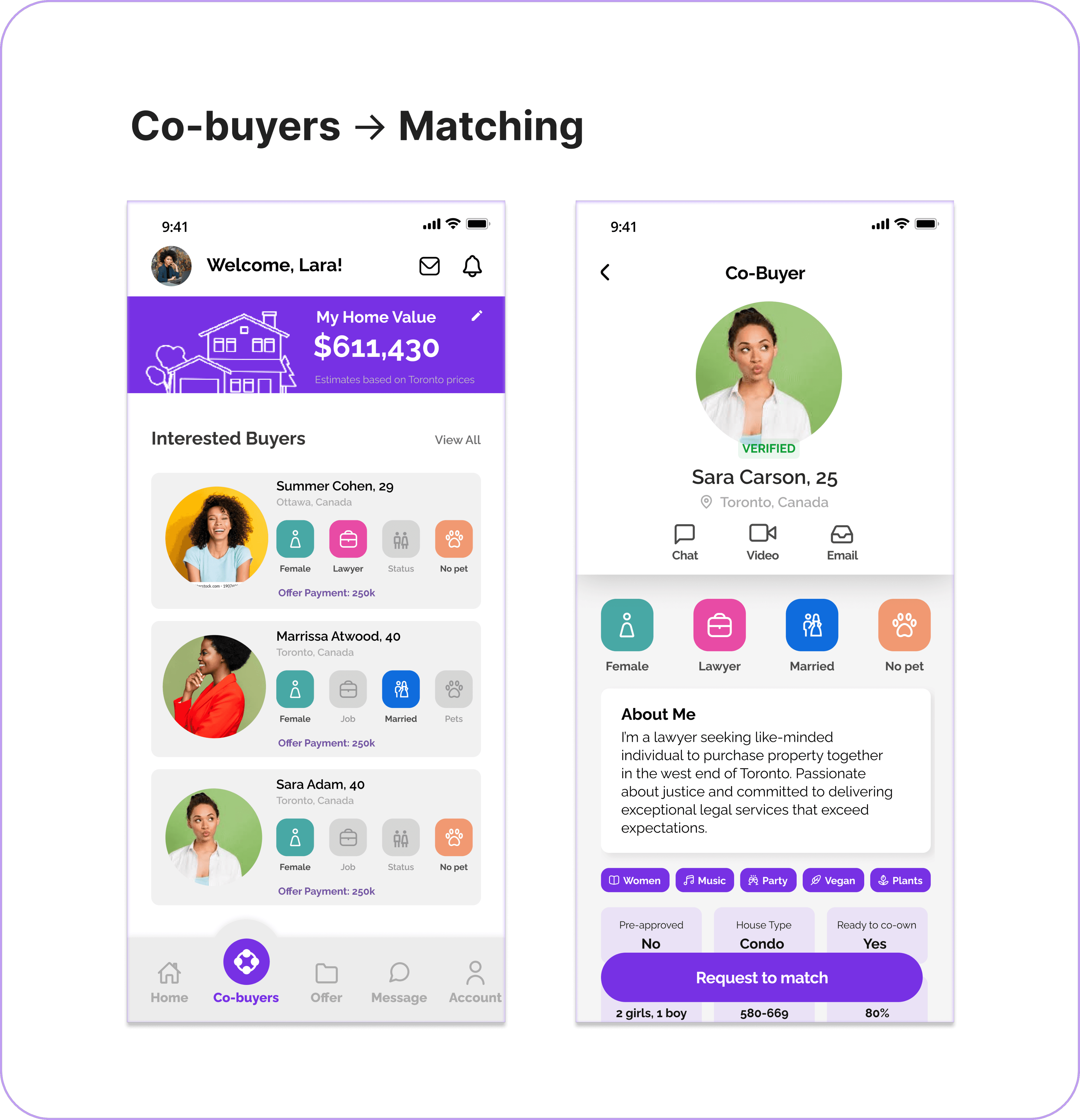
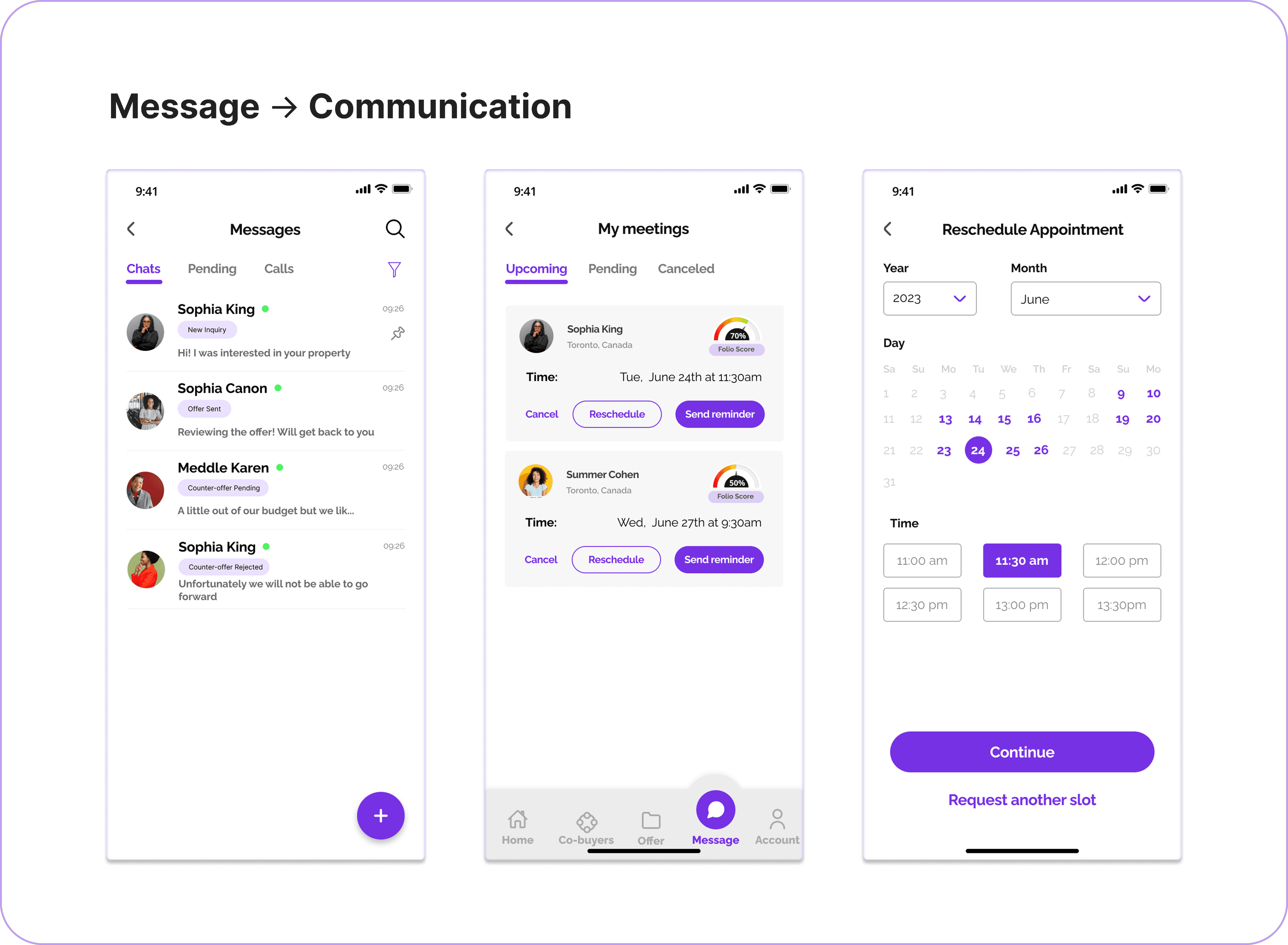
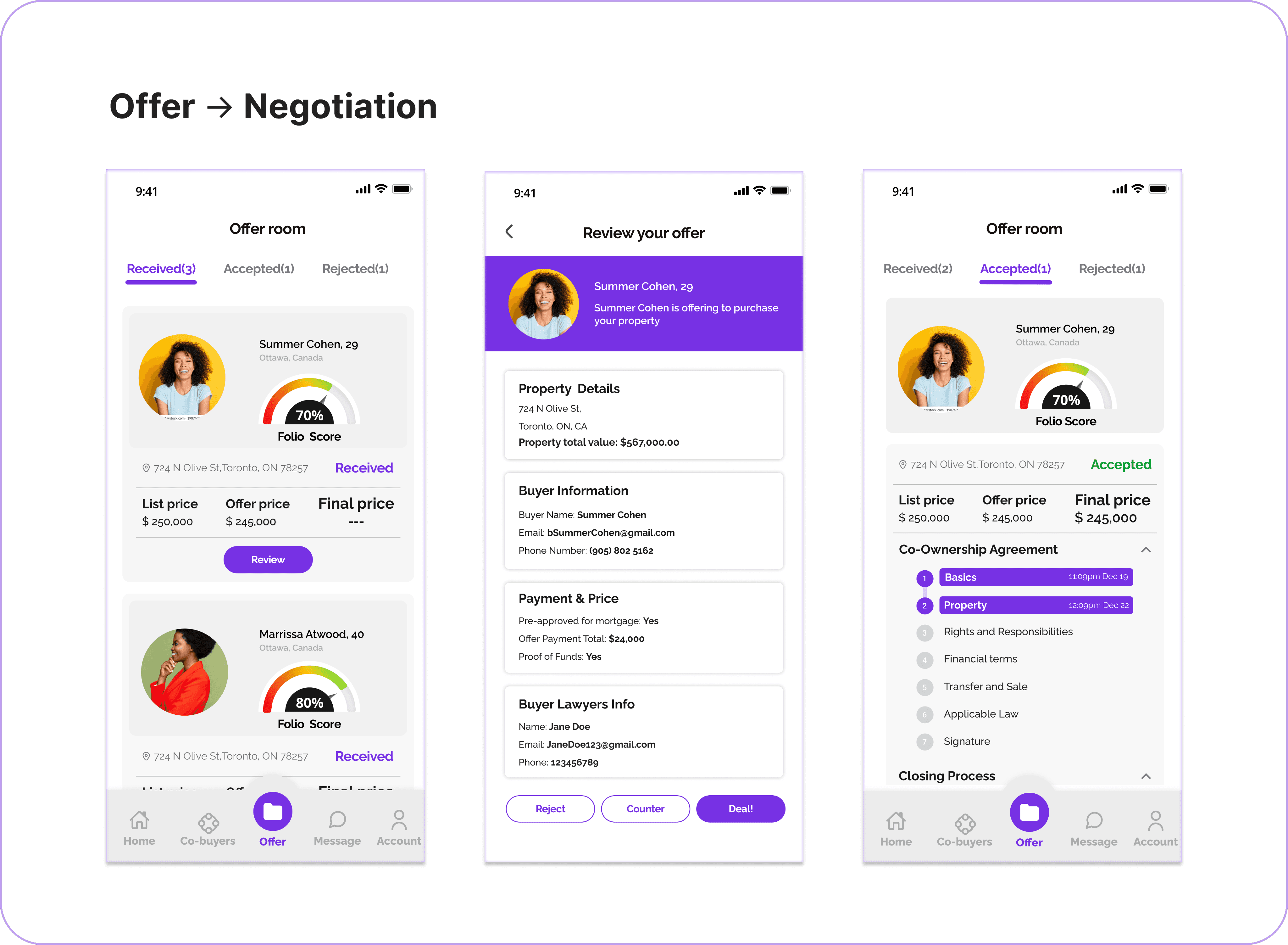
Bridging the gap between intent and action through core functional modules: Co-buyers for matching, Offer for bidding, and Message for communication.
By treating every feature as a deliberate stepping stone, we ensured the interface confidently drives success by guiding users through the final, critical stages of the transaction.
05 Quantify Value: Visualizing the "Folio Score" for long-term equity
Focus
Home Value Score screen
Leveraging Buyer Folio’s native AI algorithms, we designed the Folio Score interface to distill complex market variables into one dynamic, intuitive score.

TAKEAWAY
Complexity ≠ Chaos
For complex, asset-heavy workflows, design is not about removing features; it’s about optimizing the information architecture for better clarity.
AI Explainability
Abstract AI outputs only gain credibility when translated into actionable insights. By surfacing the tangible factors behind a score, design transforms a 'black box' algorithm into a reliable decision-making tool, fostering user confidence through clarity.
Metric-Driven Design
Lowering cognitive barriers is a direct catalyst for business growth, where accessible complexity reduces friction to fuel measurable conversion spikes.
Design as Consultancy
It's our job to present what we know so the client can make a more educated decision. While we may not always agree of the final decision, speaking up fulfills our duty.

Open to work