SOLECIT
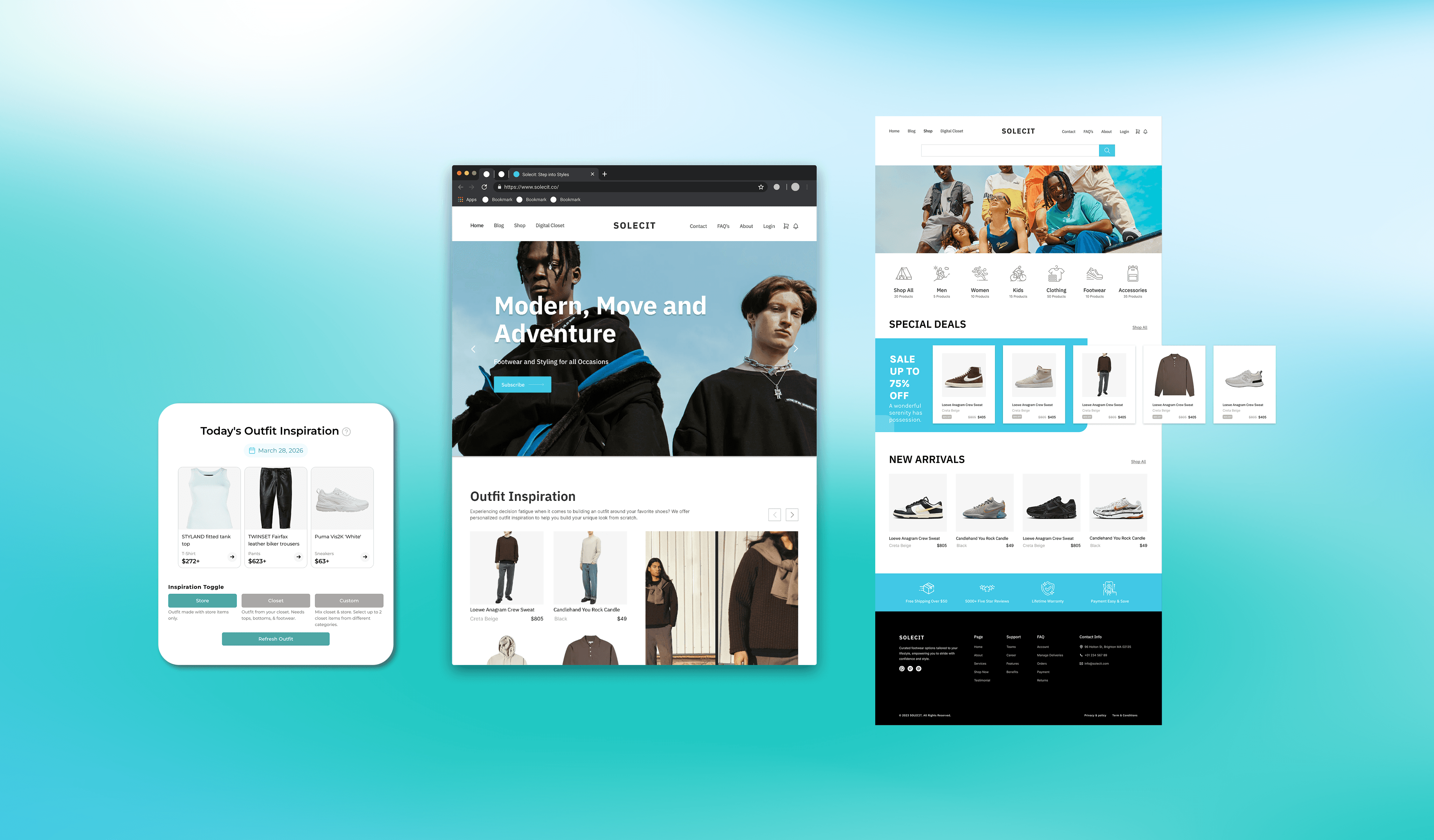
Redesigned Solecit’s website to support its shift into a styling and acquisition platform, improving product discovery and strengthening brand clarity.
DOMAIN
E-Commerce
Fashion
B2C
ROLE
Product Manager
UX Designer
TEAM
1 Product Manager
3 UX/UI Designers
TIMELINE
Sep - Dec 2023
OVERVIEW
Creating a space where style-seeking users discover inspiration and shop the pieces they love.
Background
Project Goal
Redesign Solecit’s website to strengthen its brand identity and communicate its shift into a styling-driven platform through a more cohesive experience.
Solution
· Redefined the sitemap and user flows to improve navigation.
· Redesigned key pages (Home, Shop, Product) to enhance usability and product discovery.
· Strengthened brand identity by embedding footwear-centered styling and acquisition into the IA.
Achievement
Usability testing, n=15. Metrics are based on task completion and post-task ratings.
Click-through rate (CTR)
+18%
Scroll depth
+20%
DISCOVER
Users came for chic outfits, but found no clear direction.
Research Method
Competitive Analysis, User Interviews, Affinity Mapping, Journey Mapping
Problem
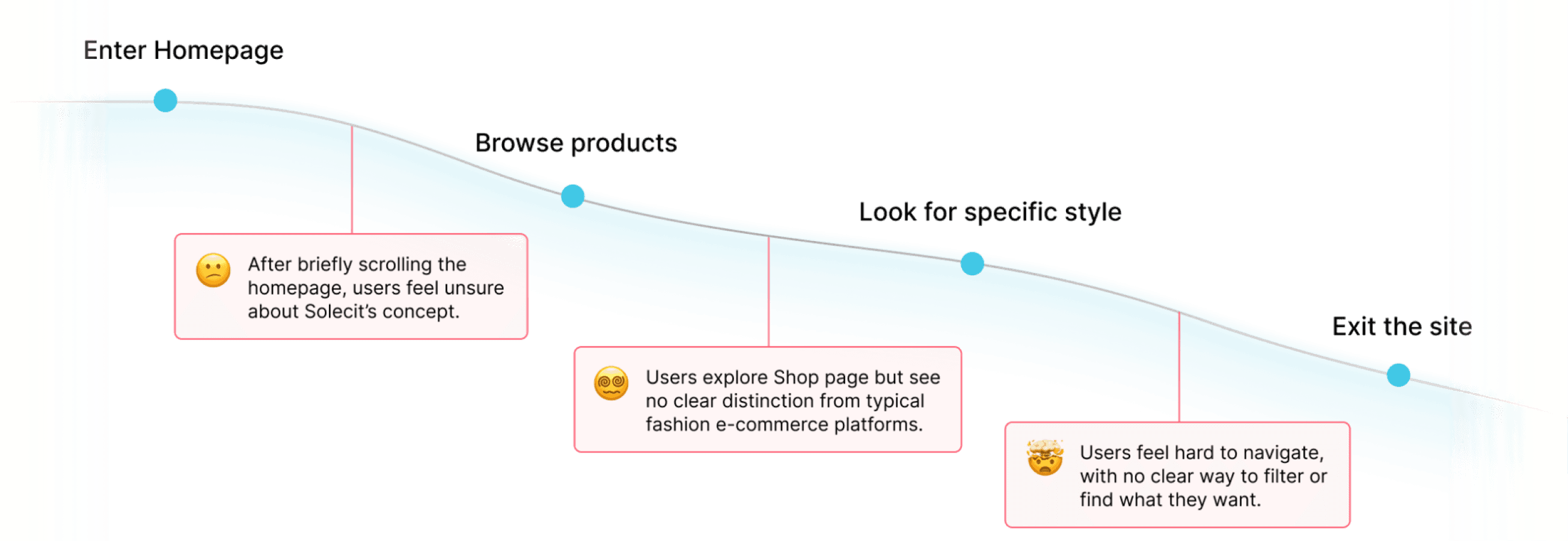
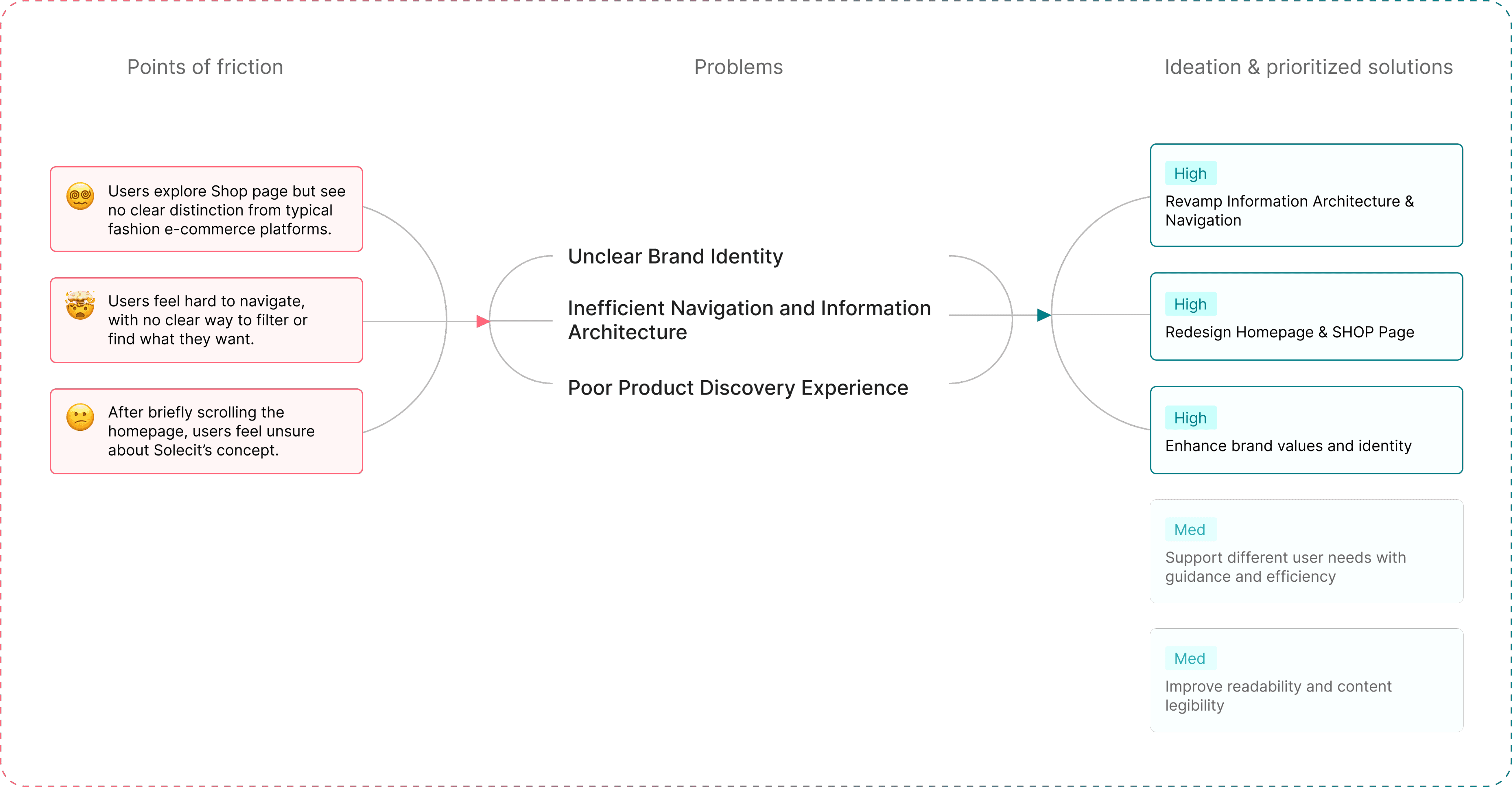
01 Unclear Brand Identity
The website failed to clearly communicate Solecit’s new identity, lacking strong visual cues, styling content, and trust signals.
02 Inefficient Navigation and Information Architecture
Confusing navigation, unclear categorization, and limited filtering made it difficult for users to understand the structure and find products efficiently.
03 Poor Product Discovery Experience
The experience lacked clear pathways from inspiration to purchase, with limited styling guidance, weak recommendations, and low engagement.
Insight
From interview with 2 target user groups
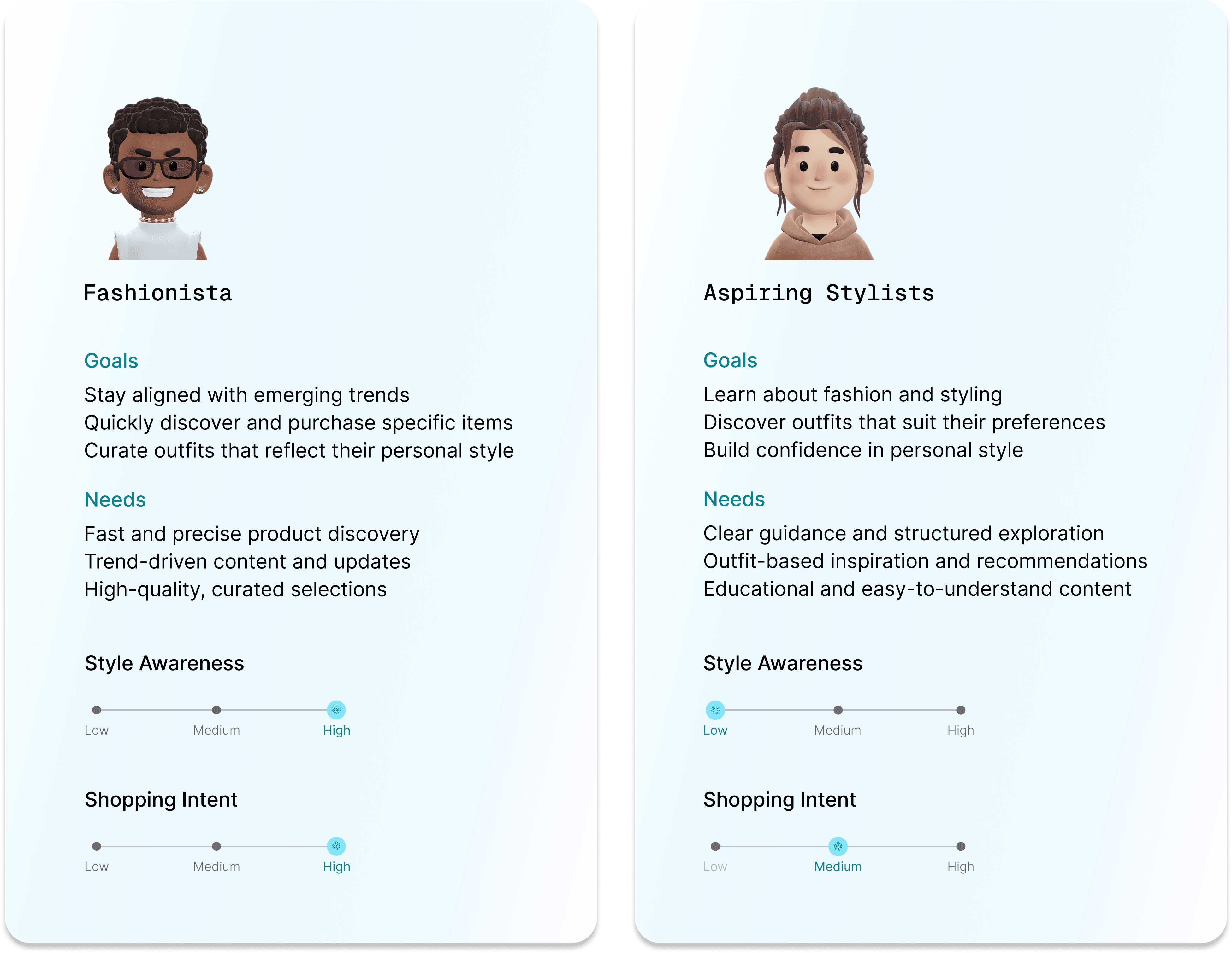
=> Users vary in styling knowledge and purchase intent, requiring the design to accommodate both guidance and efficiency.
DESIGN GOALS
01 Revamp Information Architecture & Navigation
Revamp the entire site's information architecture by implementing user-friendly navigation and redesigning the SHOP page to align with the company's updated business model.
02 Redesign Homepage & SHOP Page
Redesign the Homepage to clearly showcase the website's key features and reflect the brand's unique personality.
03 Enhance brand values and identity
Enhance the visual design to ensure the website's aesthetics align seamlessly with the brand's values and identity.
DESIGN
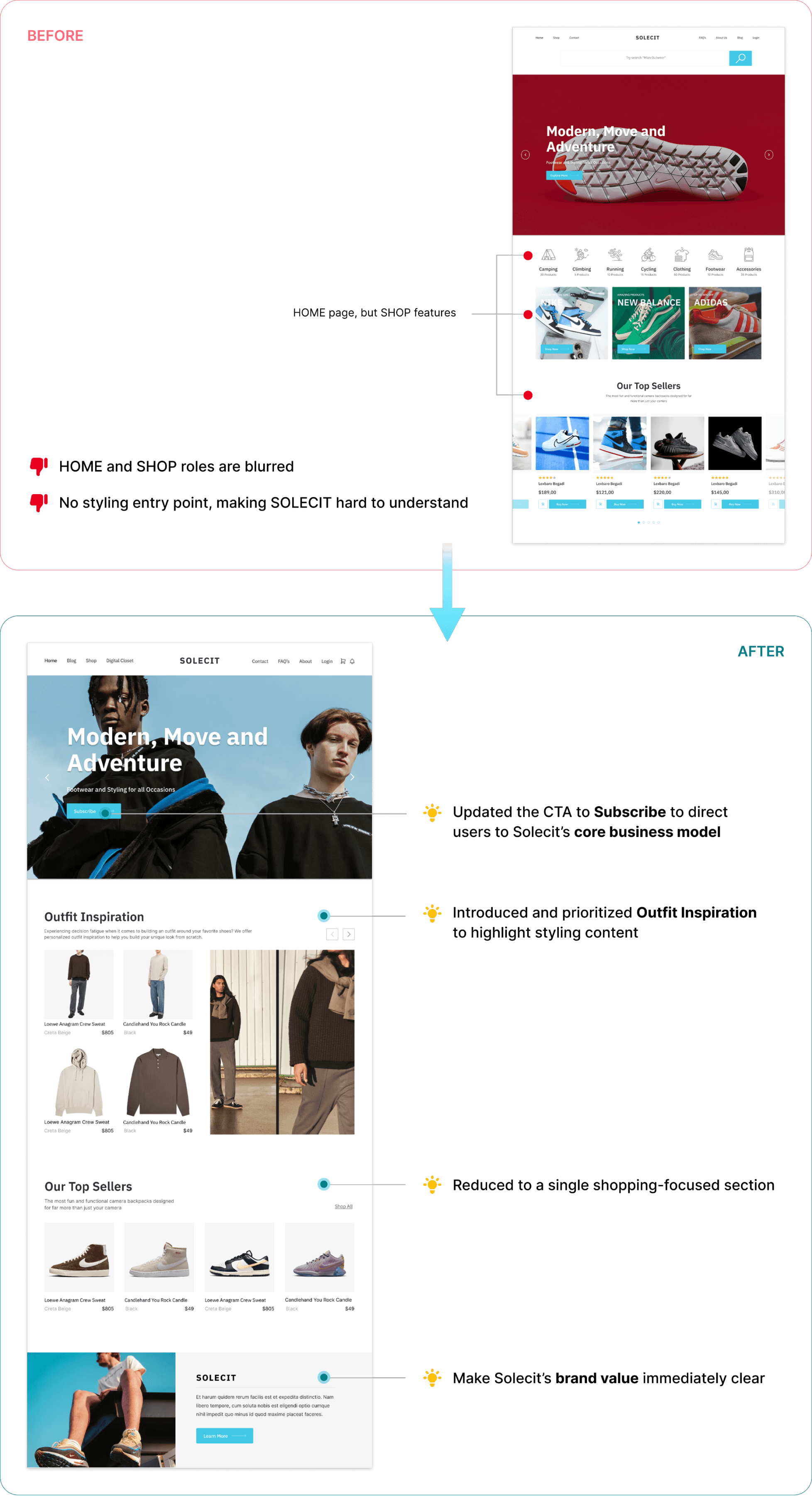
Challenge01: A Homepage That Hides What Matters
The homepage blurred with Shop and felt generic, failing to communicate Solecit’s brand value. The redesign simplified content and introduced a clear styling entry point.
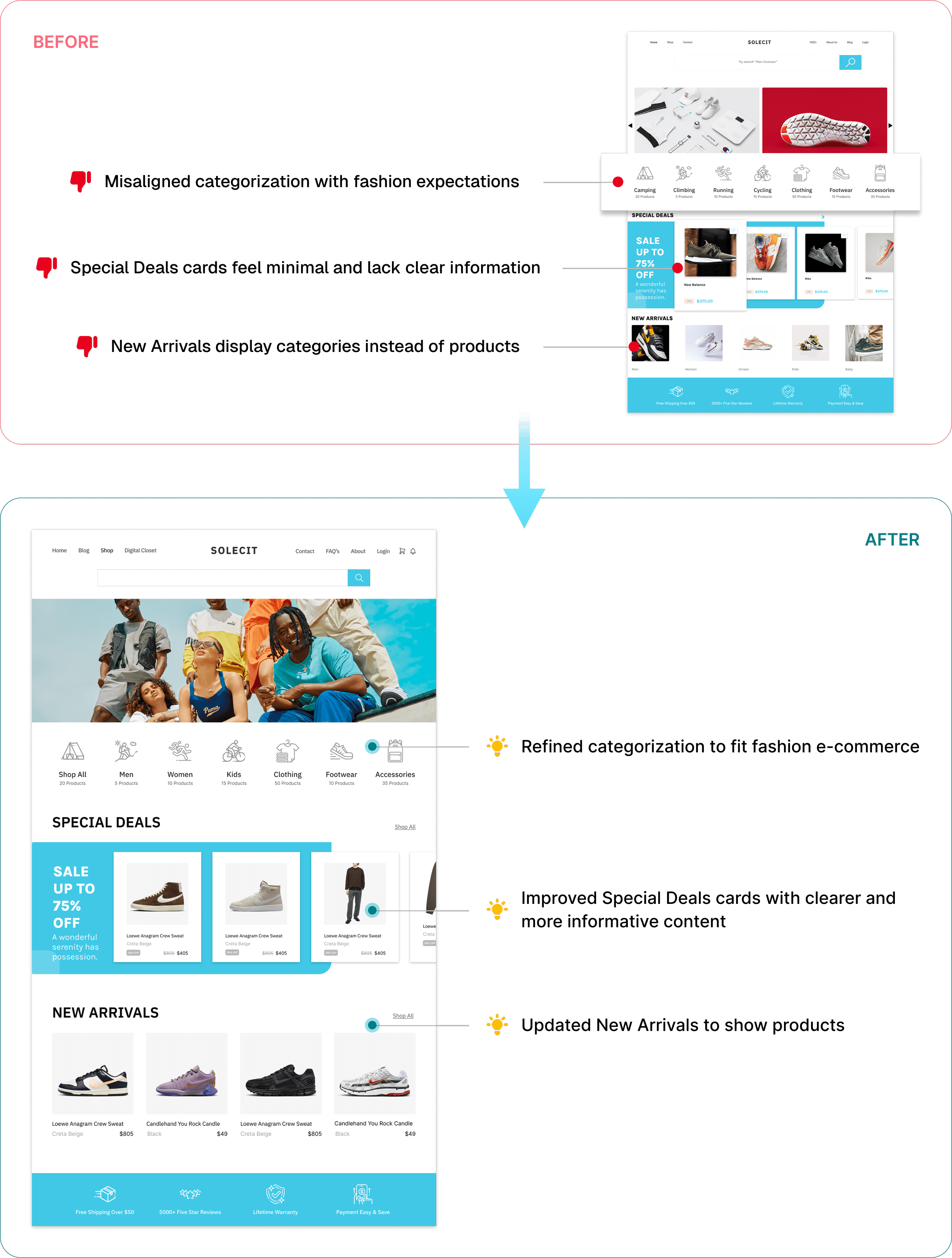
Challenge02: A Shop That Feels Misaligned with Fashion
The Shop feels misaligned with fashion expectations, with unclear categorization and low content relevance making browsing less intuitive. The redesign addressed these issues accordingly.
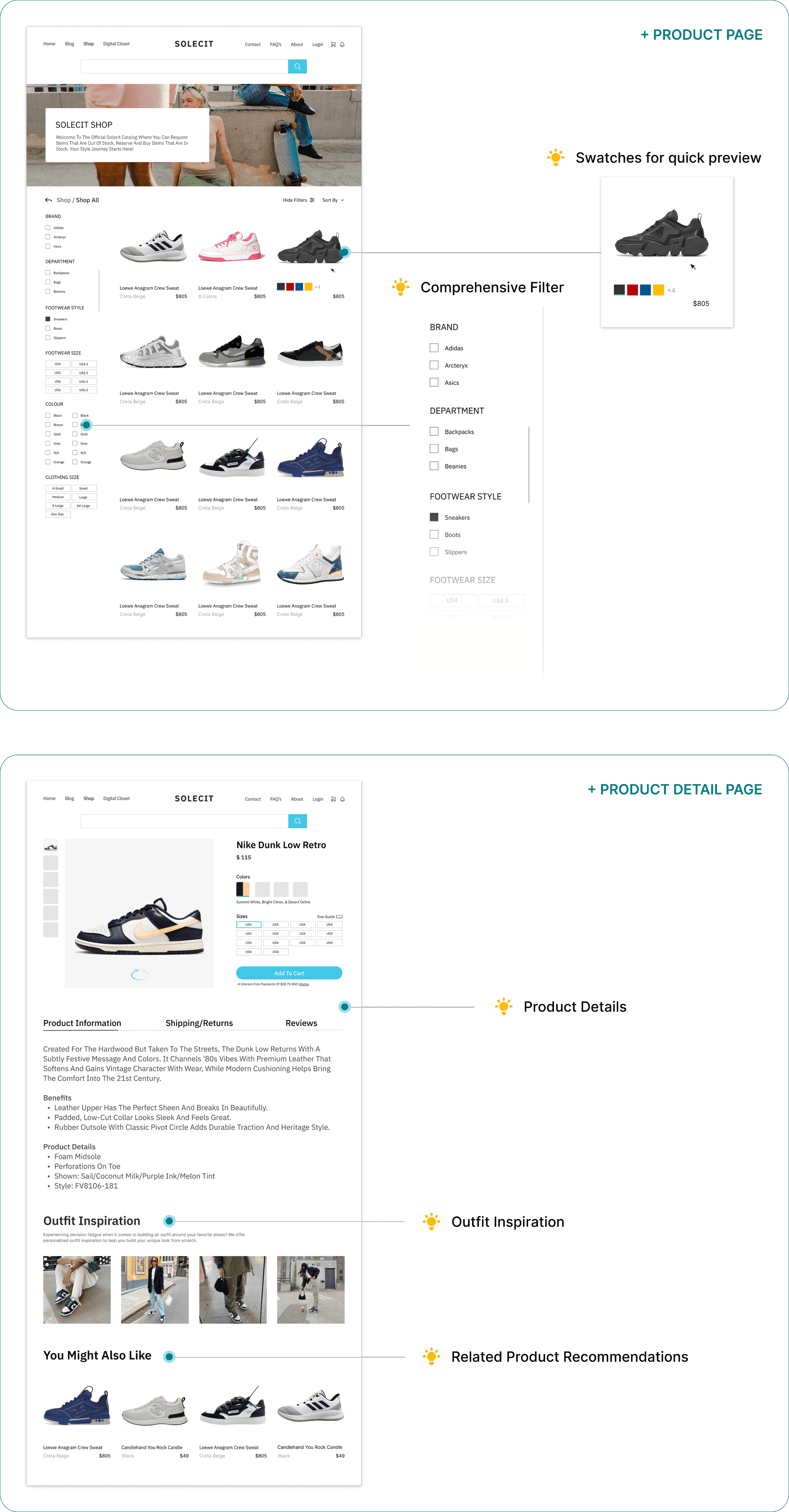
Challenge03: A Missing Product Detail Experience
Introduced Product and Product Detail pages integrating outfit inspiration, swatches, and recommendations to provide richer context and better showcase Solecit’s styling expertise.
USER TESTING
Users not only wanted to shop, but also to understand how to style.
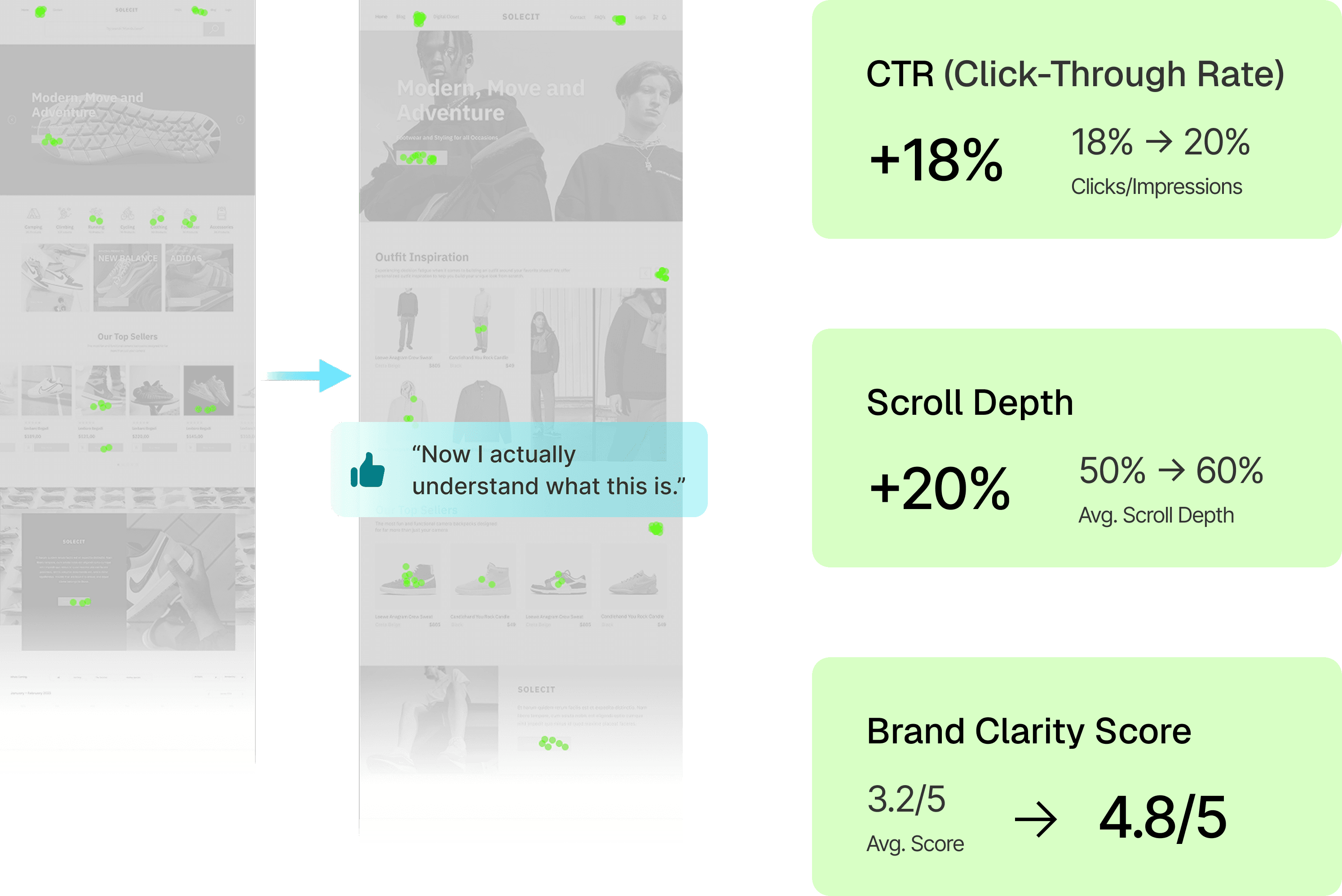
A/B Testing
n=15. Metrics are based on task completion and post-task ratings.
Comparing the original and redesigned experiences revealed clear improvements in engagement, exploration, and understanding.
Result
Users explored more and understood better.
Next Work
CAMBRIDGE LOCAL FIRST
NGO
End-to-End
Led an end-to-end redesign of CLF’s content-heavy platform, from research to WordPress implementation, creating a scalable system that improves navigation and content management.
Open to work